Anchor
Anchor supports people with anxiety disorders and panic attacks through the often lengthy wait for therapy - a time when many feel lost and alone.
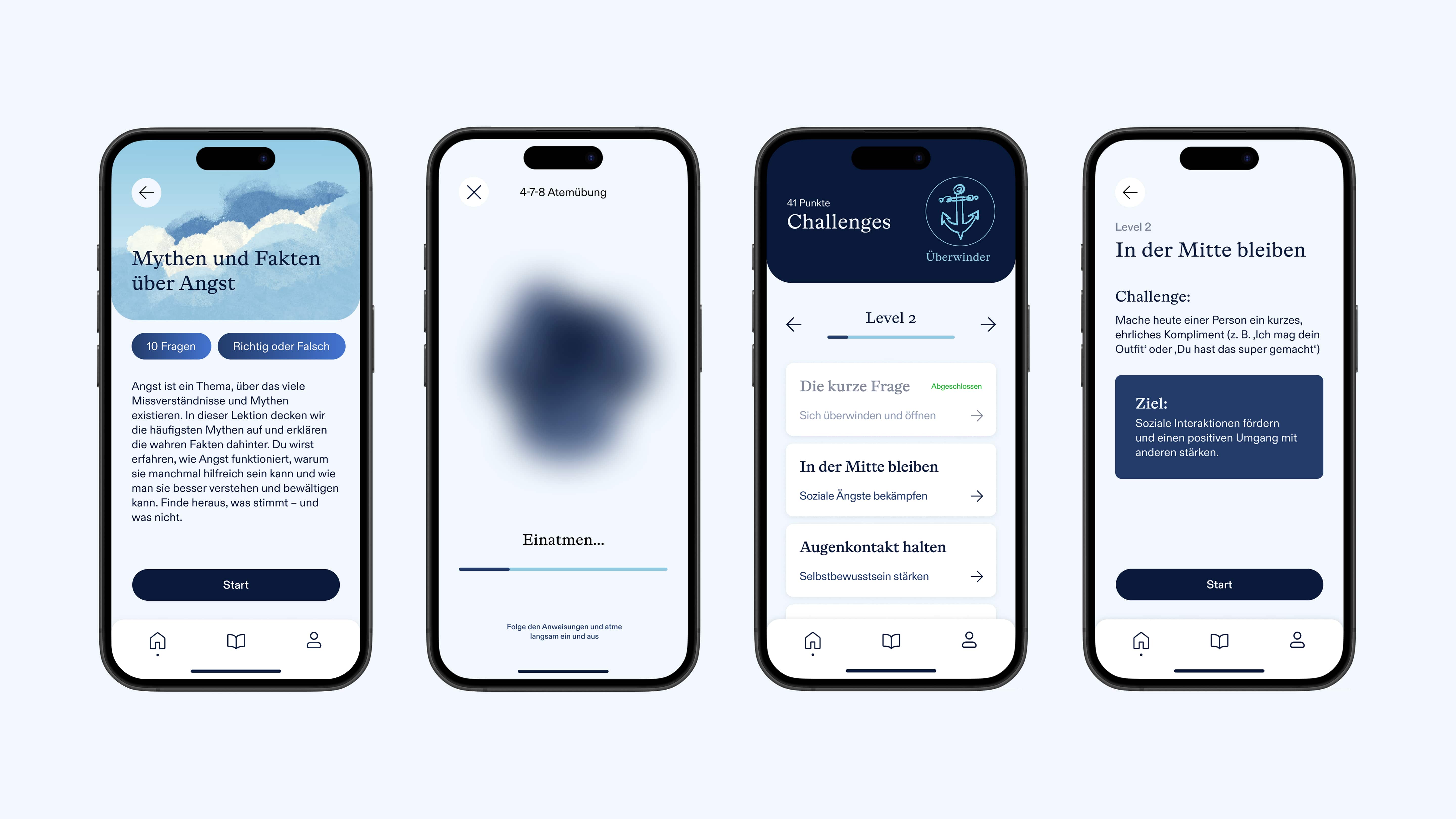
With personalized exercises, a mood-tracking tool, and expert-backed insights, the app helps users better understand their anxiety, actively build mental resilience, and track their progress.
By providing structure and support, Anchor makes the waiting period a meaningful first step and ensures a smoother transition into therapy.
Responsibilities:
User Research, Qualitative Interviews, User Journey Mapping, Wireframes, UI Design, Prototyping and Interaction Design
With Tianxiong Zhong
Research
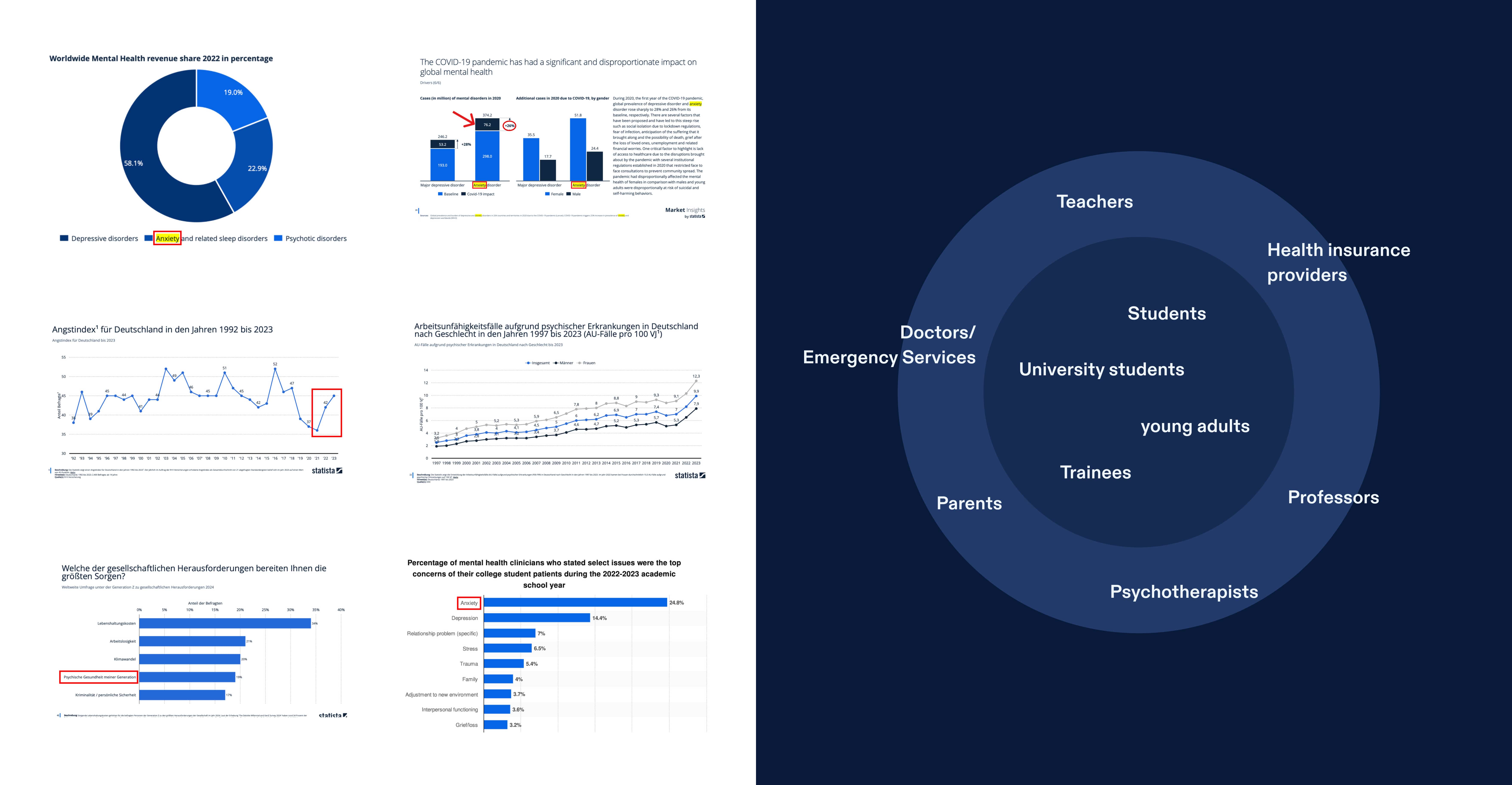
Anxiety disorders among young adults surged by 26% post-pandemic, and in Germany mental-health-related sick leave climbed from 8% in 2019 to 12% in 2021. Despite over 50% of Gen-Z naming anxiety as a top concern, average wait times for psychotherapy often exceed three months-leaving many to manage panic attacks, sleep loss, and social isolation alone. This untreated gap worsens symptoms and increases the risk of long-term impairment.
Interviews
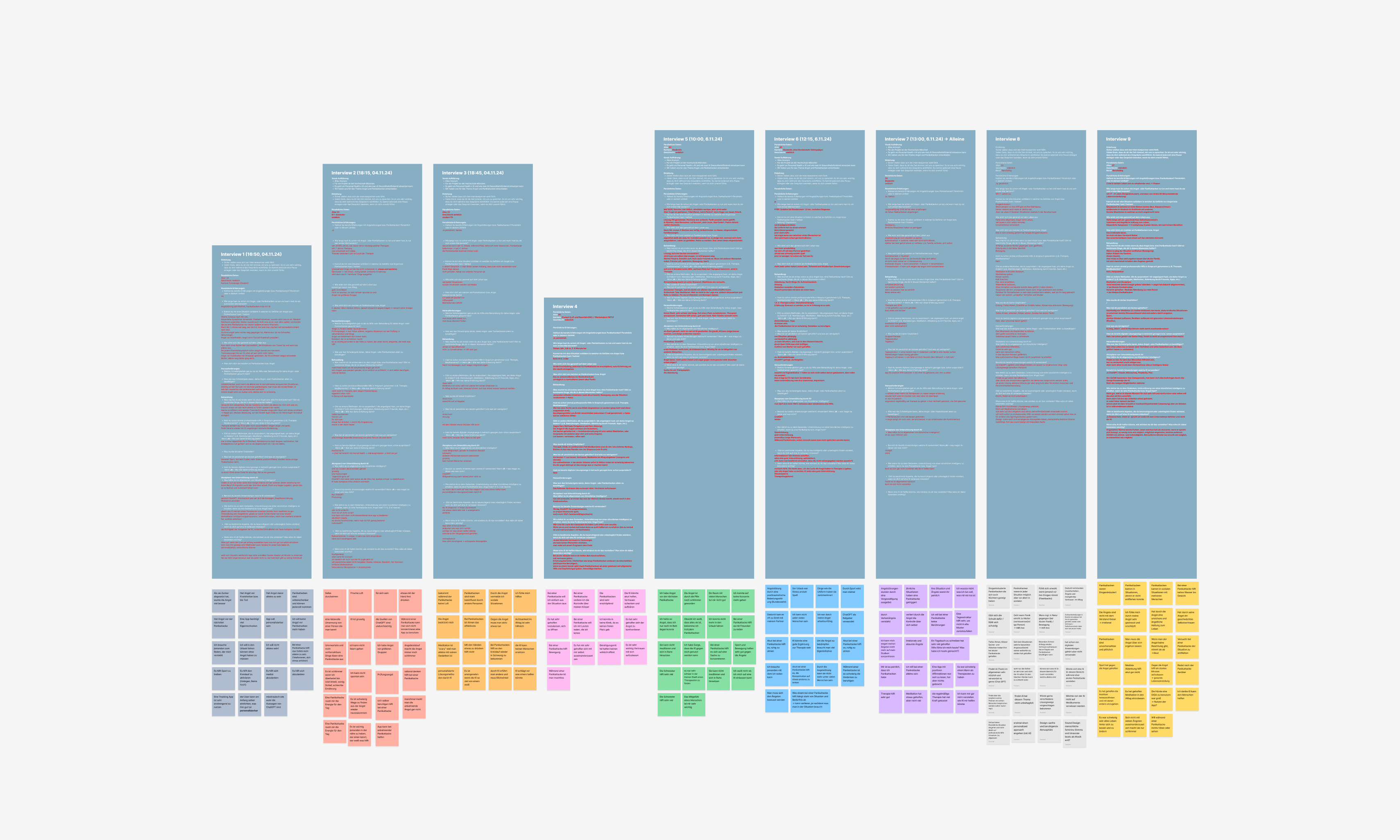
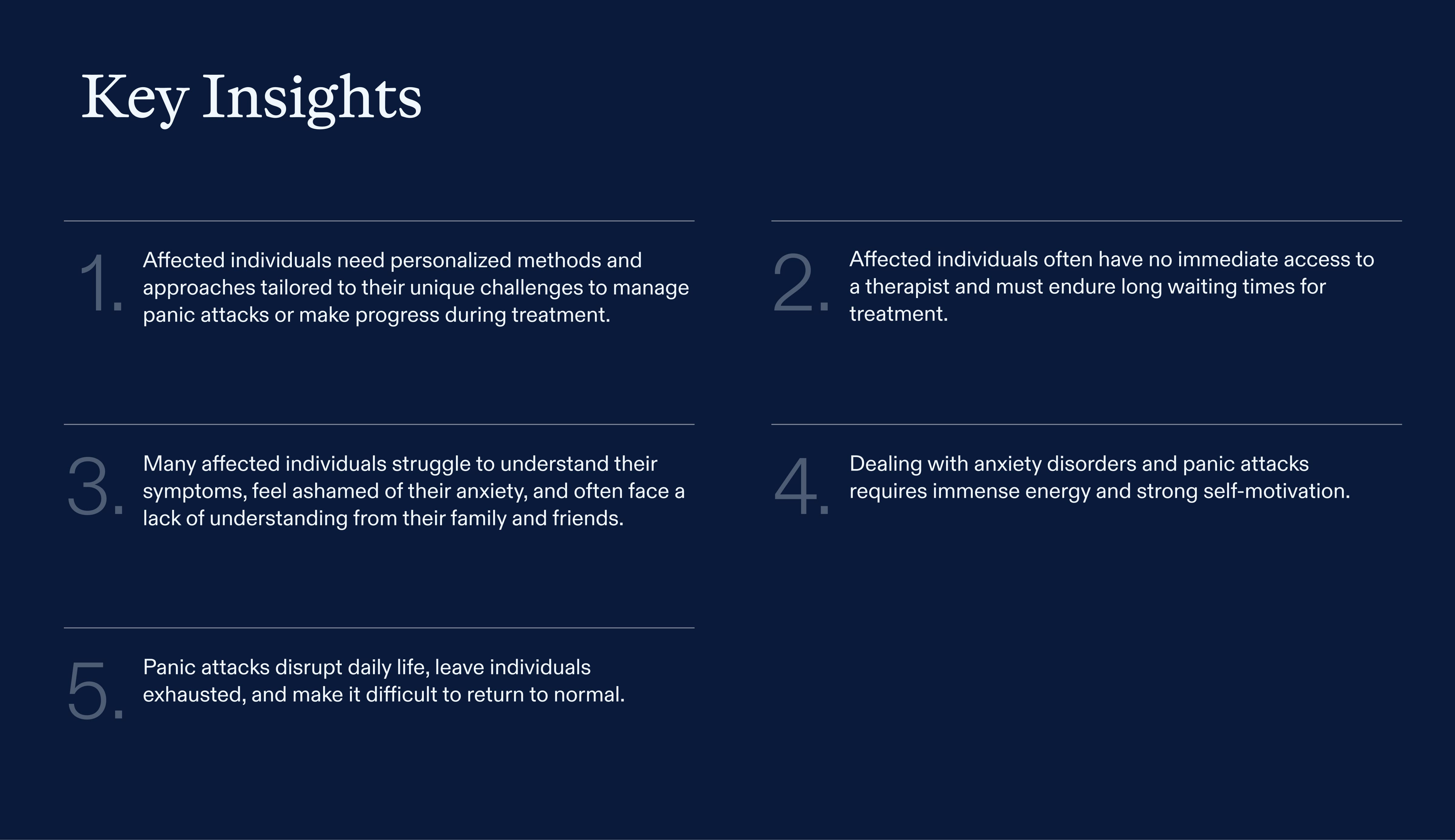
We conducted nine in-depth interviews with people who experience anxiety or panic attacks, plus one with a licensed psychotherapist. Recruiting participants for intimate, emotionally charged conversations required extreme sensitivity: we built trust through active listening, clear consent, and empathetic prompts. These sessions revealed not only pain points around self-management and stigma, but also the gap in support during therapy wait times.
Insights
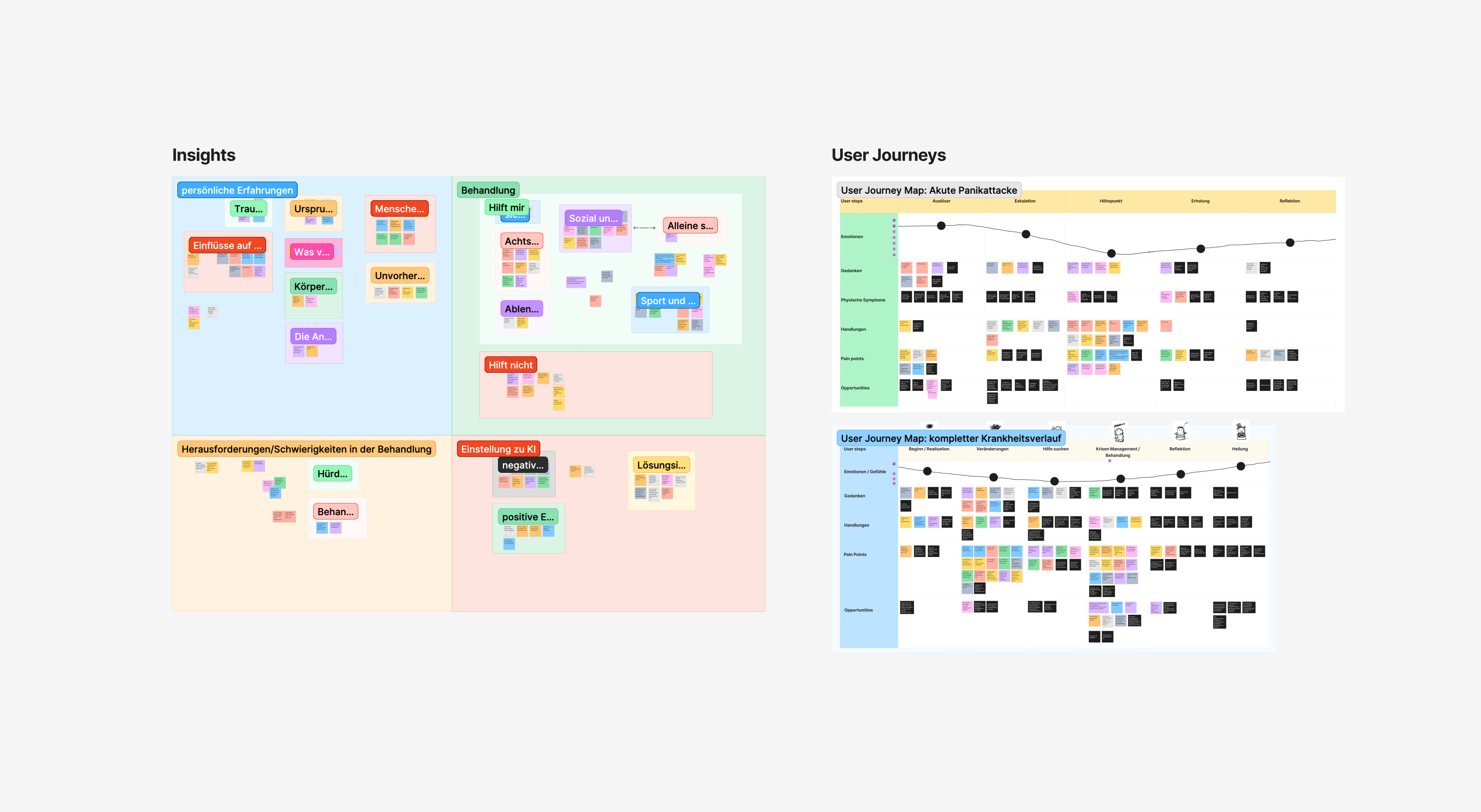
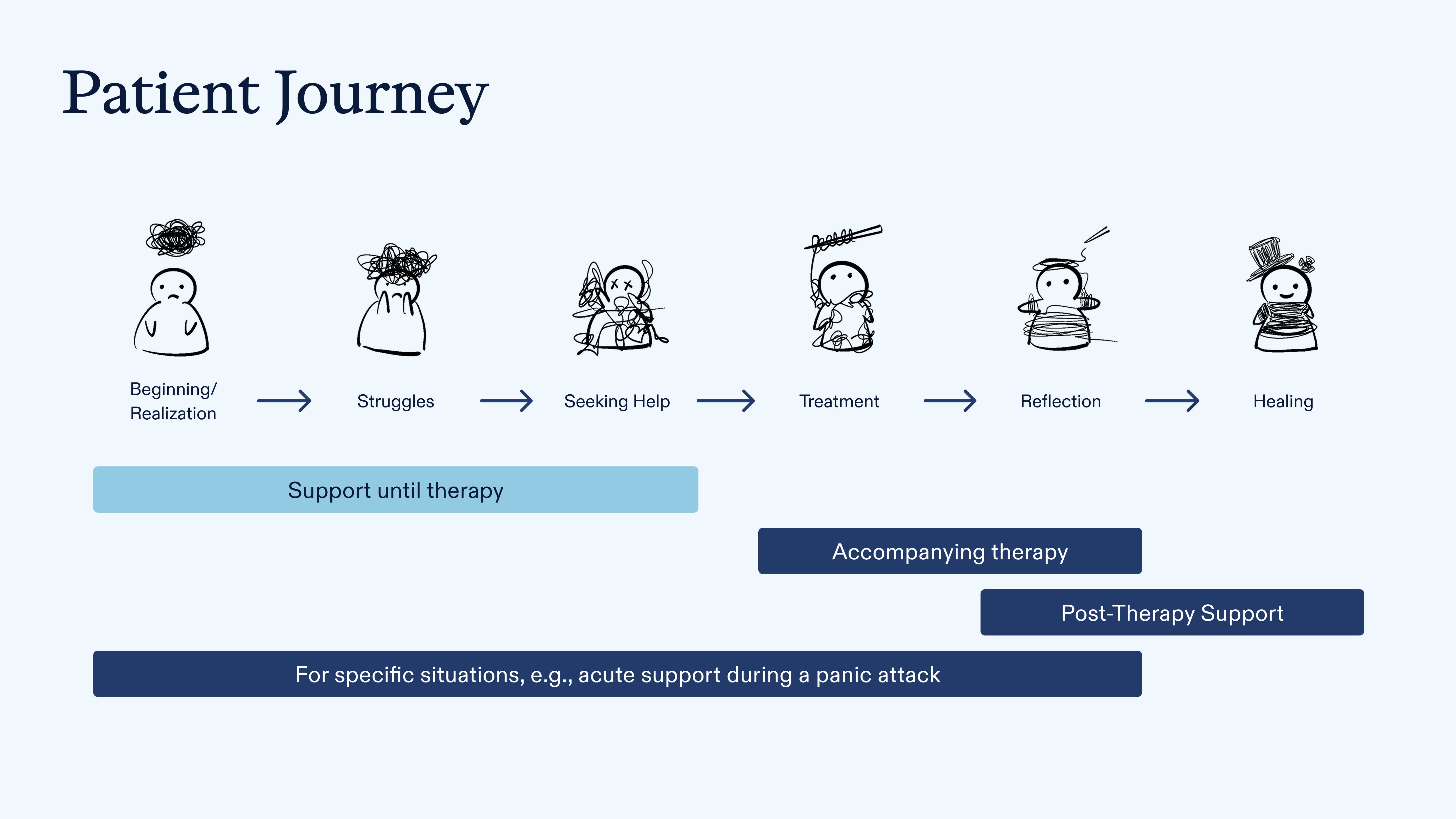
To make sense of our qualitative data, we mapped two patient journeys—one high-level and one detailed-to visualize emotional states, triggers, and touchpoints over time. We then grouped insights thematically (e.g., “Personal experiences”, “Pain points”, “Treatment”) to uncover design opportunities. This methodical synthesis helped us identify where users felt most lost, where they needed education versus immediate relief, and where small interventions could boost resilience.
Strategy
Instead of repeating existing in-therapy app features, we focused on the unaddressed pre-therapy waiting period. By overlaying our patient journey with stakeholder inputs, we spotted a unique opportunity: create an accessible, structured support system to guide users from crisis toward treatment. Anchoring our strategy on this gap let us craft a service that becomes the “meaningful first step” in mental-health care.
Ideation
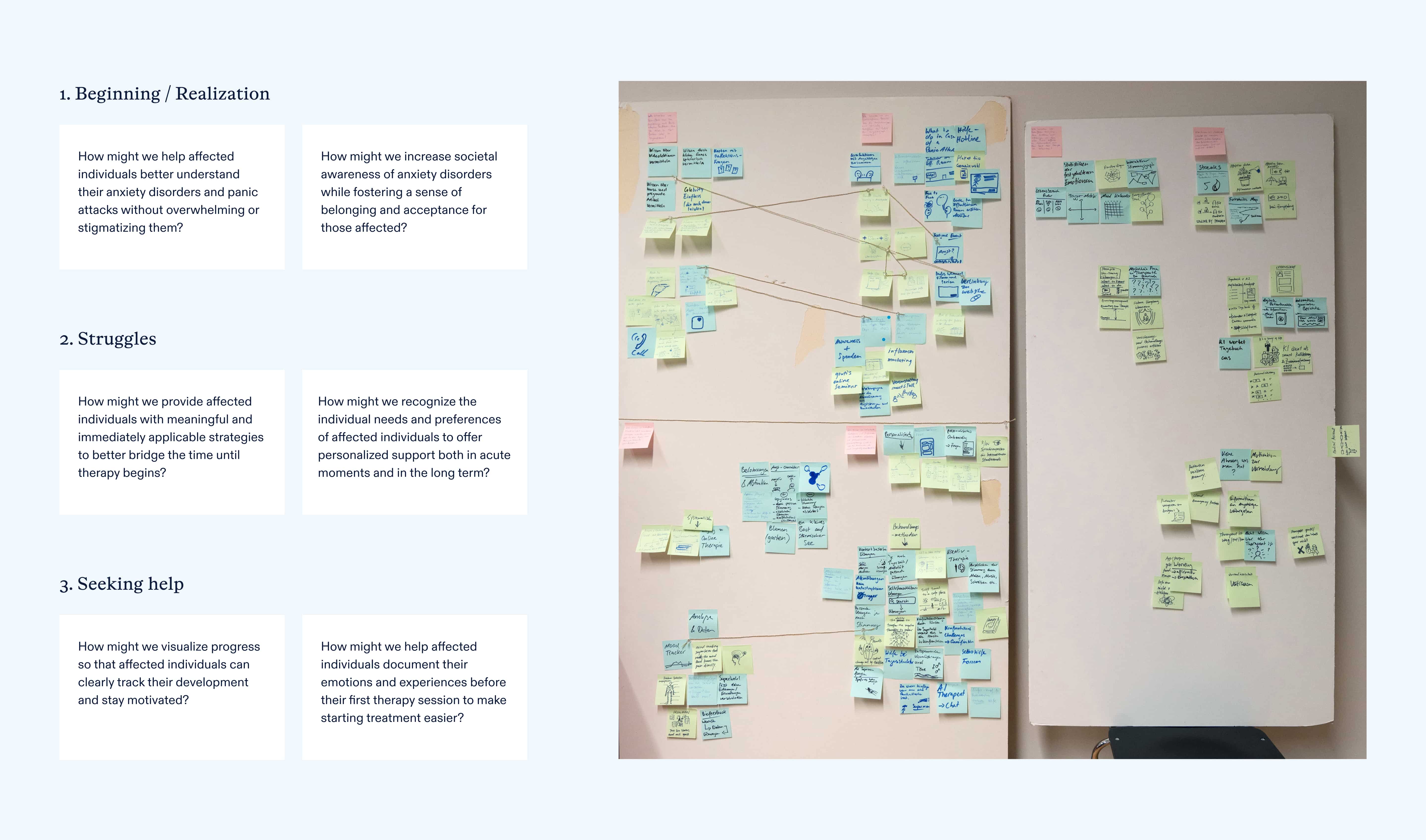
We framed three journey phases-Beginning/Realization, Struggles, and Seeking Help for Therapy-and for each defined How-Might-We questions to spark targeted solutions. For example, “How might we offer immediate calming exercises without overwhelming new users?” and “How might we track progress so users see their own growth?” This led to a suite of features-from empathetic journaling to challenge-based exercises-that directly map back to our insights.
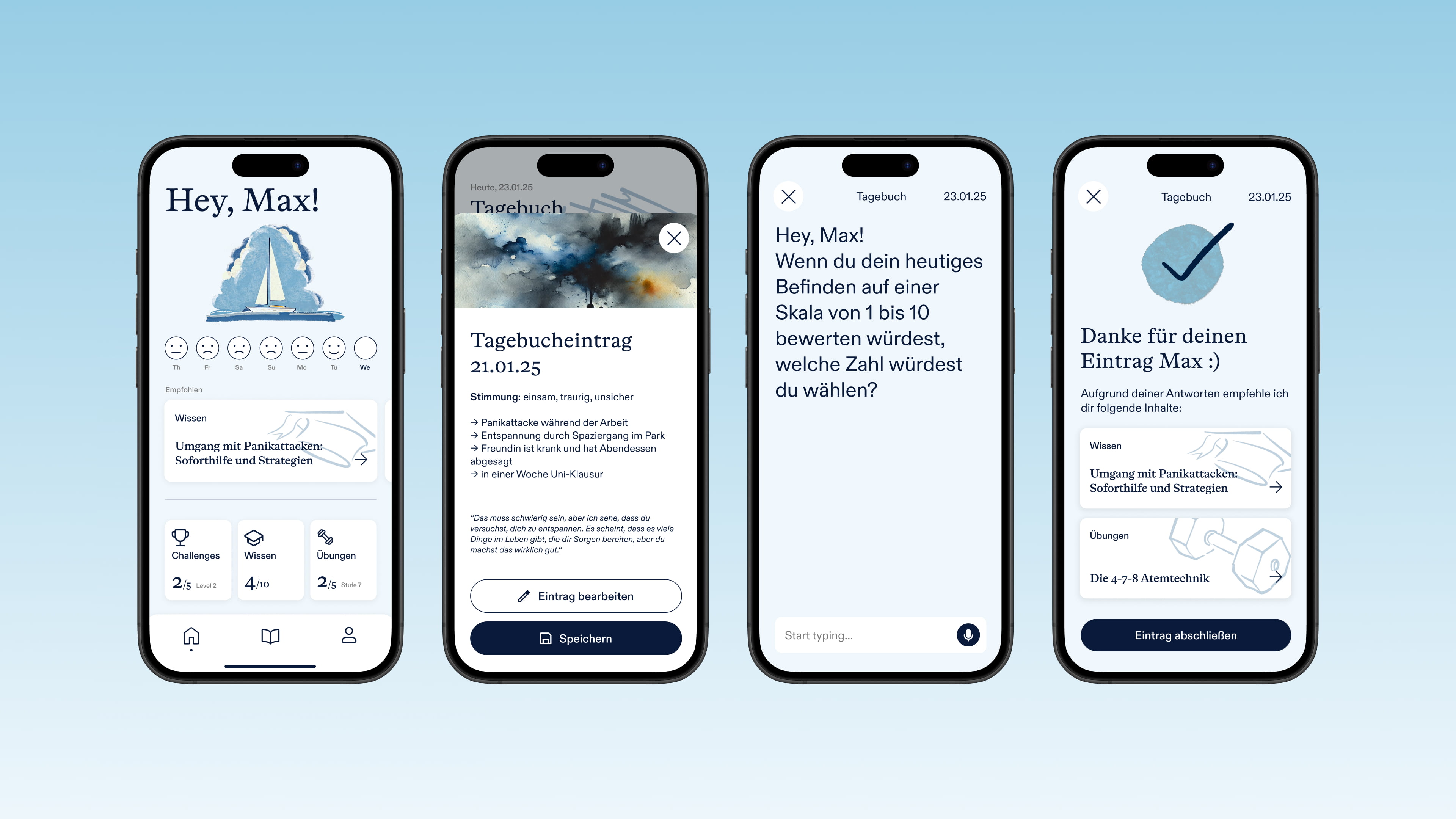
Diary
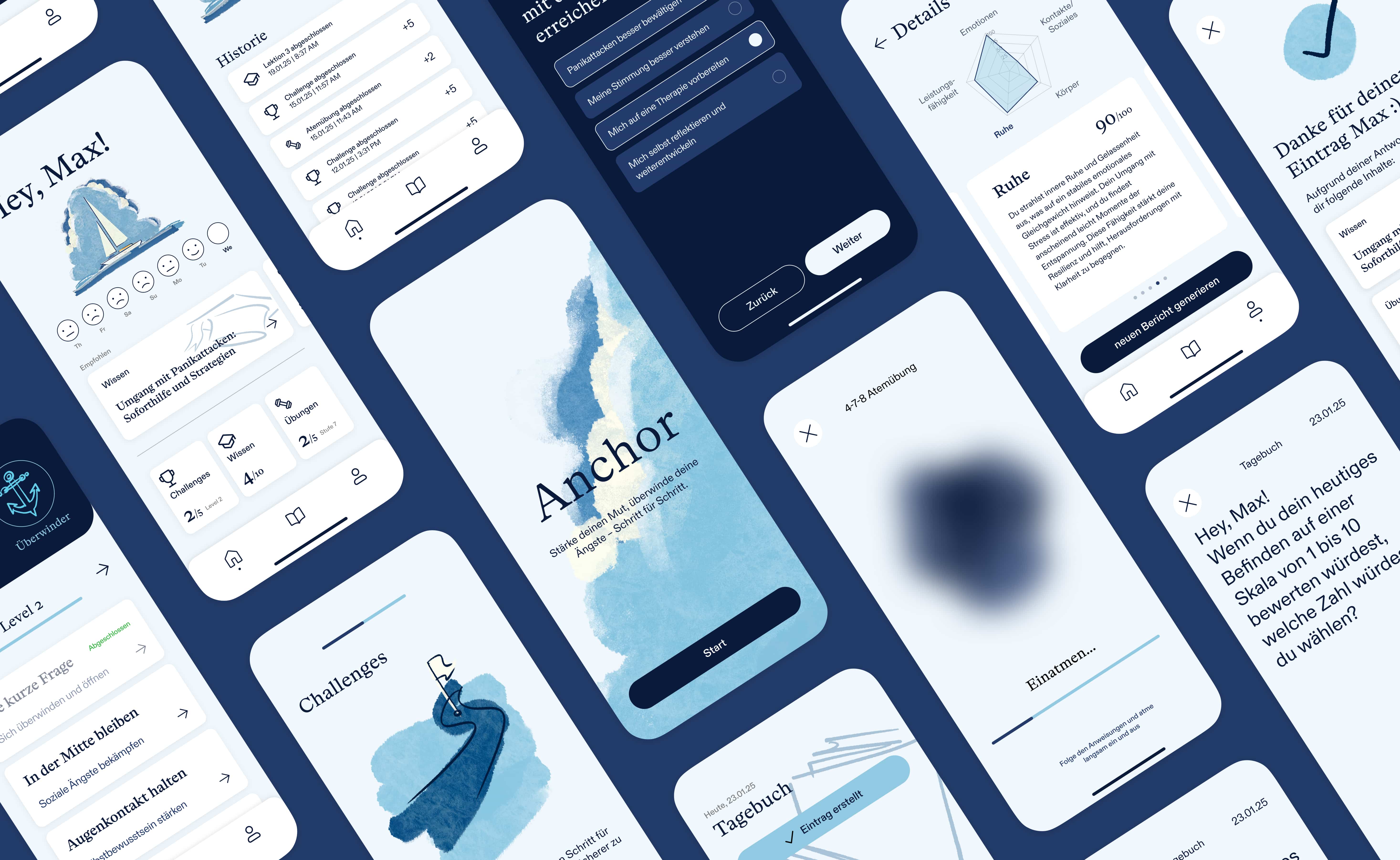
The conversational AI-powered diary is our signature feature: rather than static text fields, users talk through their experiences in a supportive chat interface. Empathetic prompts encourage openness and reflection, while natural language processing tailors follow-up questions. This human-centred approach lowers the barrier to self-disclosure and creates richer data for both users and their future therapists.
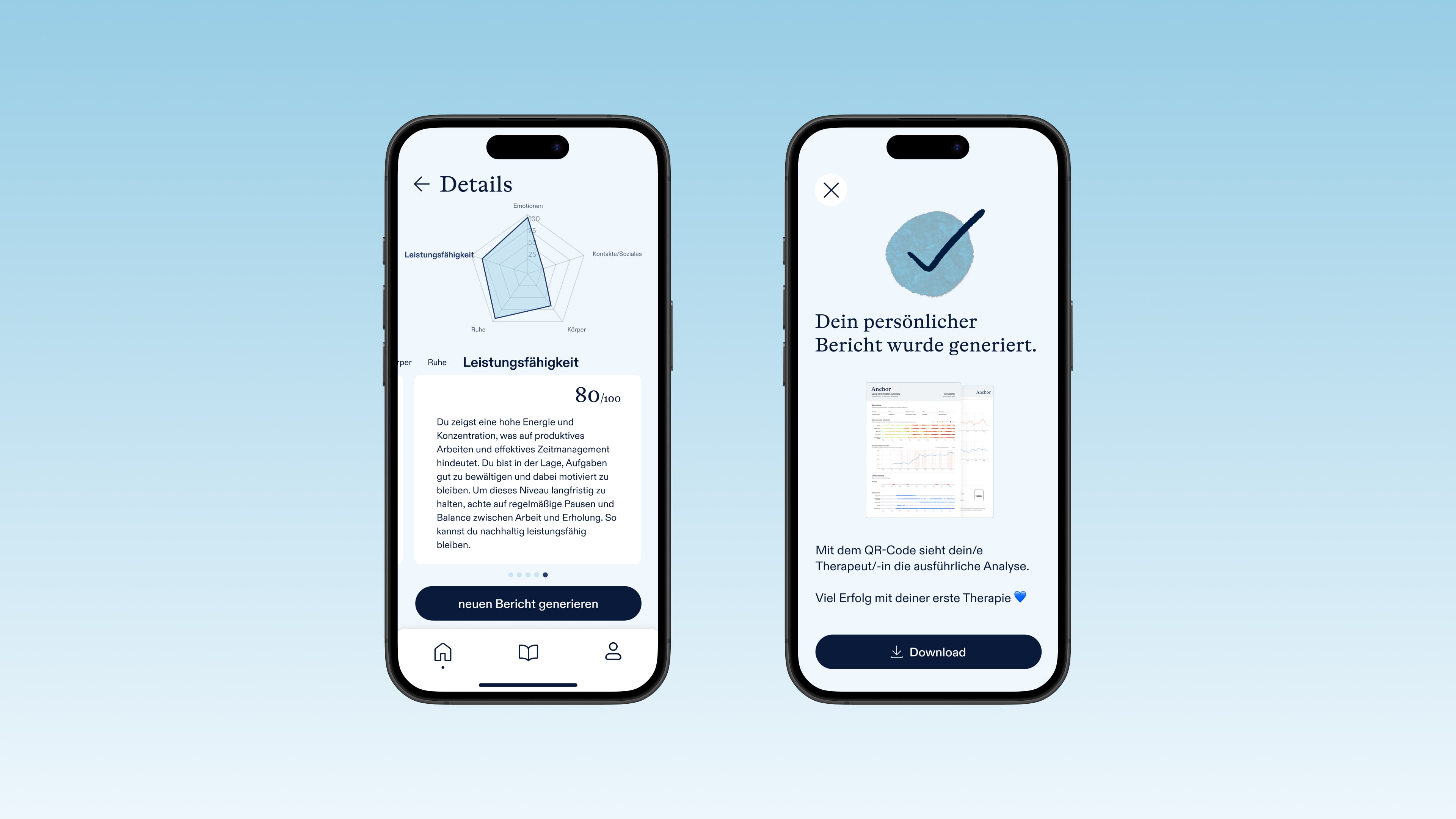
More features
Therapy Readiness Report: Automatically generated summaries of mood trends and skill-practice history, reducing therapist onboarding time and lowering healthcare costs.
Interactive Challenges: Bite-sized, CBT-inspired tasks—like guided exposure or positive-reinforcement exercises—to build coping habits.
Psychoeducation Modules: Engaging, gamified lessons on anxiety and panic mechanics, designed to demystify symptoms and destigmatize self-care.
Breathing & Relaxation Tools: Quick-access exercises for acute relief, visually tied to our storm-and-sail metaphor for intuitive feedback.